What continuity looks like in communications

Strong communications are rarely built through one-off moments. We explore how trust can be created when messages, tone and priorities all hold together over time – across reports, leadership communications, campaigns, and periods of scrutiny.

“It’s the economy, stupid.”
Readers of a certain age may remember the famous catchphrase from Bill Clinton’s 1992 presidential bid. Created to remind campaign staff what the public cared about most, the slogan has inspired multiple spin-offs: “It’s the environment, stupid”; “It’s the customer experience, stupid”; “It’s the algorithm, stupid”.
To which I would add, “It’s the trust, stupid”. Because with public confidence in institutions diminishing and AI unlocking a Pandora’s Box of perceived inauthenticity, trust today is among an organisation’s most valuable assets.
As a business or institution, how you speak to the outside world – through storytelling and creative comms – is critical to earning that trust. That means expressing your purpose and values not just with clarity but with constancy. Because the minute you give the impression of wavering in your commitment or moving the goalposts, people will start to doubt your integrity.
The problem is, in a multi-platform, multi-format landscape, with each channel carrying wildly different audience expectations, consistently articulating your mission and identity is hard.
Tone of voice matters and there’s a line to tread between ensuring your communication style resonates with a chosen channel’s audience while faithfully reflecting your institutional essence. An e-newsletter for investors and a social media post celebrating stakeholder achievements should, naturally, strike different tonal notes. Yet both must still be recognisably you.
Tone of voice is only the tip of the iceberg though. What really brings everything together is the underlying message that reflects your values – the unique “red thread” that runs through all your communications. And that thread needs to be consistent not just across different channels, but also over time. There’s no question that a single strong campaign can be effective in that moment. But ask yourself this: when your brand evolves over months or years, will that same message still ring true?

Case study: how Expo City reinforced its values as its story evolved
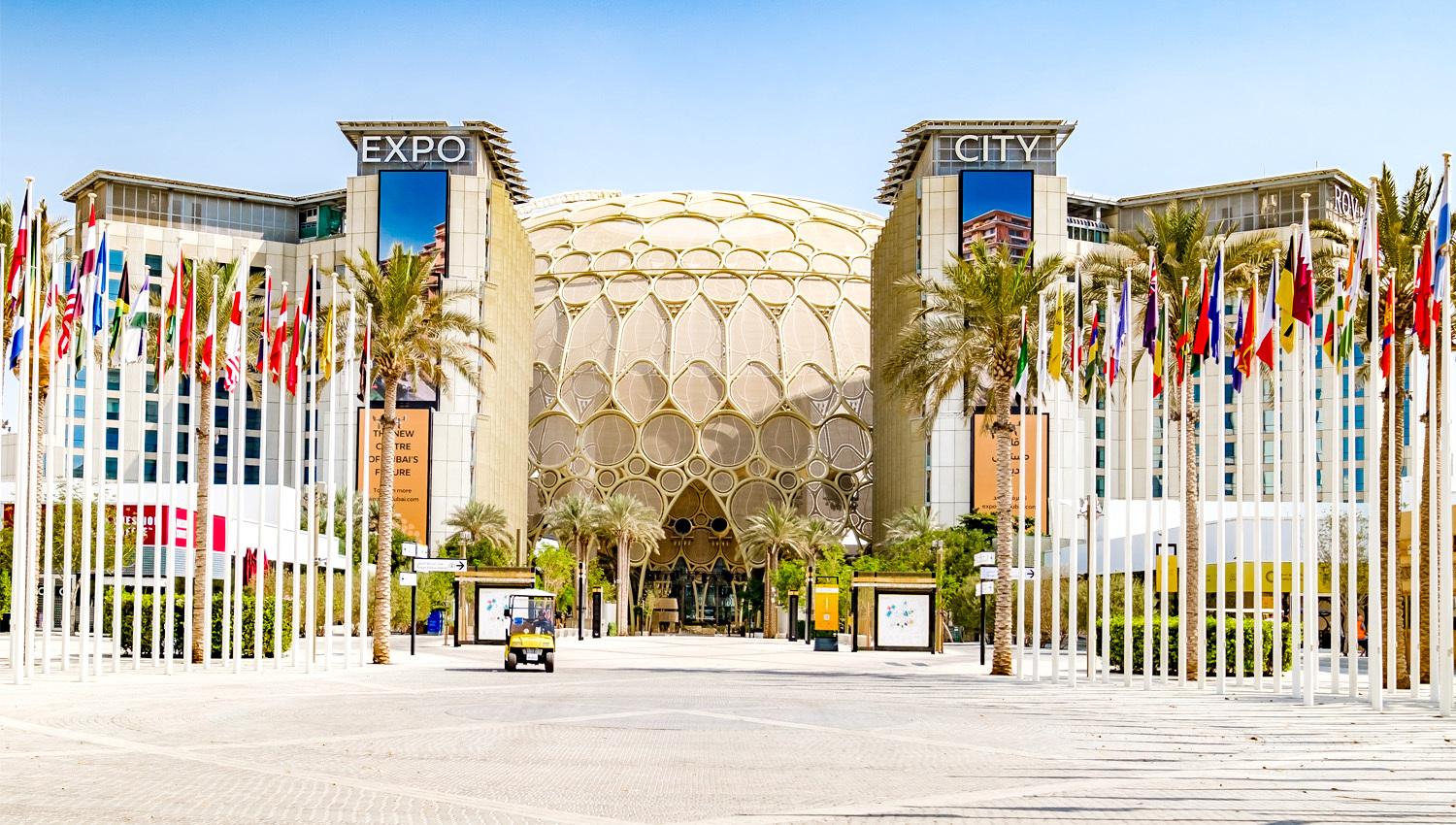
I was lucky enough to be part of the editorial team at the 2020 World Expo in Dubai, staying on for a period when it transitioned to its legacy venture, Expo City Dubai. Occupying Expo 2020’s former site, Expo City is designed as a model for sustainable urban living. In addition to being a place where people live, work and do business, it is also a hub for global events and discussions on how to make cities worldwide more sustainable.
I have since moved on to new projects but have watched from afar how the organisation continues to tell its evolving story. During Expo City’s transition from global mega-event to liveable city, its mission and purpose have been refined to accommodate business and commercial imperatives. Yet the principles that underpinned the World Expo – sustainability, innovation and international cooperation – are still clearly visible, four years after that event ended and across different contexts and formats.
For example, a recent series of LinkedIn posts offered a sneak peek into the Expo City urban diplomacy team’s experimentation with artificial intelligence. By lifting the bonnet on the project’s inner workings, they leant into authenticity – a key ingredient of trust-building. Most importantly, though, by sharing their working out – and inviting others to contribute their own experiences – they reinforced the city’s commitment to innovative thinking and global knowledge exchange.
Expo City’s portfolio of reports and white papers offers a more formal expression of those priorities by drawing on collaborative research and featuring expert voices from cities across the world. Meanwhile, its use of videos, podcasts and other, more interactive, media, brings the message to life by showing the city’s values in action.
That includes a series of podcasts hosted by Expo City leaders in conversation with global innovators exploring common problems that cities face and how to solve them. Part of those podcasts’ effectiveness lies in the fact that they are hosted by leadership, showing commitment to the city’s purpose at the highest level. This matters, because leaders, not just their comms teams, are responsible for spreading the organisation’s message and ensuring it stays constant. In so doing, Expo City is able to demonstrate that it is serious about its values and is working to make a positive impact.
Holding firm during times of flux or uncertainty
For some organisations, though, the real test of purpose comes during a period of scrutiny or upheaval – perhaps a crisis or a leadership change.
In times of pressure, it can be tempting to reach for a different voice, one that feels more equal to the situation. For example, a crisis might cause an organisation known for warmth and transparency to respond with corporate language or opaque legalese. Or a new CEO might push content and marketing teams to adapt messaging to match what they think shareholders want to hear during a period of transition.
However, it is in exactly these types of circumstance that organisations get to prove their authenticity. By holding resolute on their voice and their values, even in times of turbulence, they prove who they are and what they stand for.
Case study: how Co-op Group owned its data breach
Last year, UK member-owned retail cooperative Co-op became the latest victim of a wave of cyber-attacks on high street retailers, with personal details stolen from millions of customers.
During a crisis of this magnitude, leadership’s communication style can be make or break for an organisation’s reputation. In this case, then-Co-op Group CEO Shirine Khoury-Haq drew praise for responding in a way that was in keeping with Co-op’s values of community and social responsibility.
During an interview with the BBC following the attack, Khoury-Haq projected transparency and contrition. Acknowledging the gravity of the breach she avoided sugar-coating or diversionary language, instead saying simply: “I am incredibly sorry. It’s awful.”
Khoury-Haq also wrote an open letter. Speaking to the human cost directly, inclusively and empathetically, she detailed the “significant impact on me, my colleagues and on our members” and acknowledged “the strain it put on those people making it right”.
It’s impossible to know whether Co-op’s subsequent membership increase was directly attributable to its crisis comms. But there’s no doubt that values-led authenticity earned it support during a challenging period. For which it was no doubt grateful.
Because, as the saying goes, “Trust takes years to build, seconds to break and forever to repair.”
Danielle Green is a writer, editor and content specialist who has worked with Touchline on a range of third-sector and impact projects. She was previously Senior Editorial Manager at Expo 2020 Dubai and Expo City Dubai Global Initiatives & Advisory.