50 days to go

Sustainability Editor
How Milano Cortina 2026 will raise the bar for global sports events
By the end of the 21st century, only eight of the 21 cities that have hosted the Winter Olympics will be cold enough to reliably host the Games unless greenhouse gas emissions are slashed.
That’s according to research conducted by the University of Waterloo, putting the upcoming Winter Olympics in Milano Cortina under the microscope. But in an era of rising costs, climate pressure and shifting public expectations, the Games’ organising committee has developed a model designed to future-proof mega sports events.
Embracing temporary infrastructure
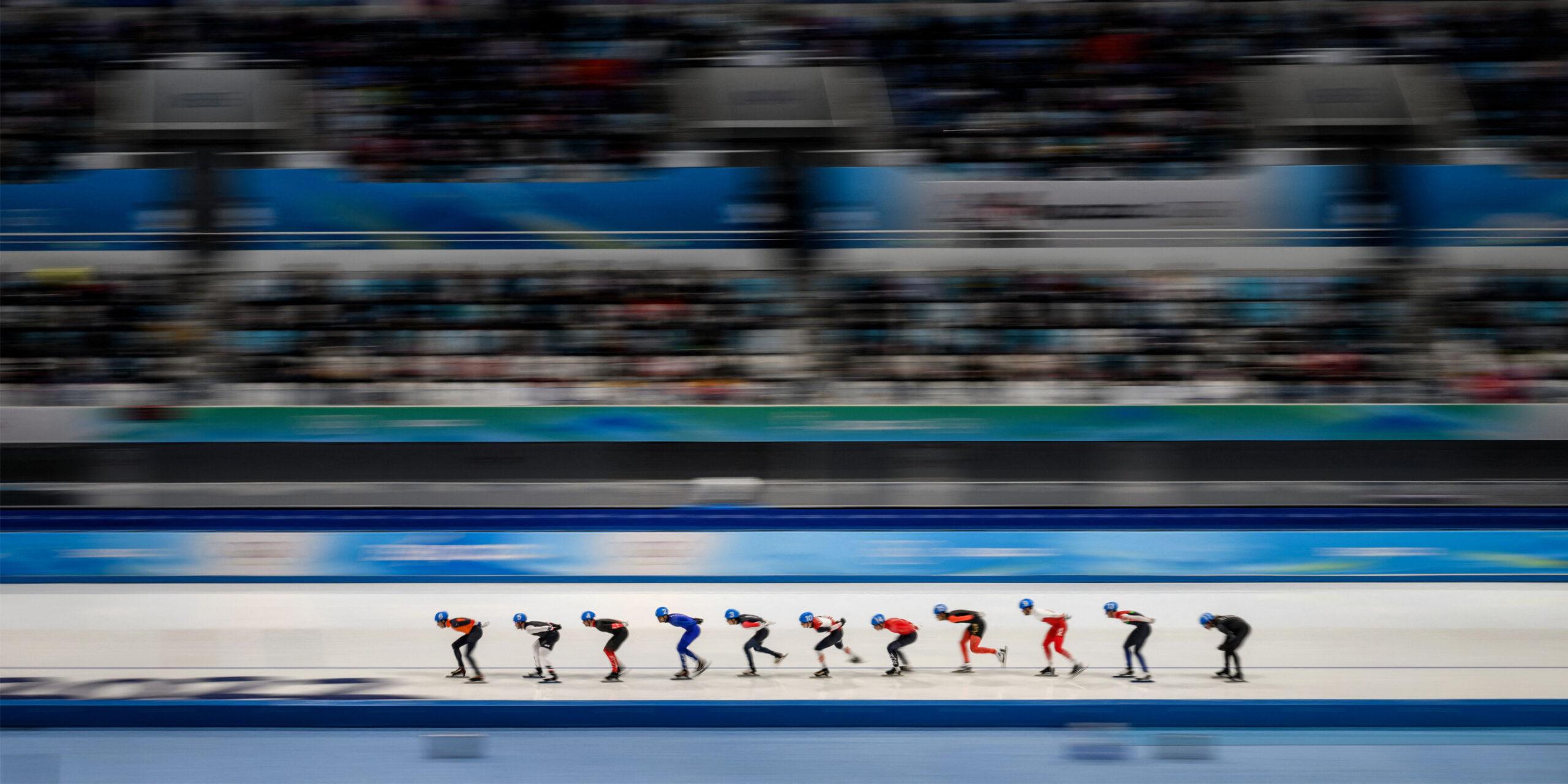
Milano Cortina 2026’s commitment to use 85% of venues that are existing or temporary aligns with the International Olympic Committee’s (IOC) ‘New Norm’ strategy for Games hosts. For example, organisers will repurpose four halls of the multi-purpose Milano Rho Exhibition Centre into Milano Ice Park, containing the 6,000-seat Milano Speed Skating Stadium and 4,000-seat Milano Rho Ice Hockey Arena.
But while temporary infrastructure is generally more cost-effective than building permanent venues, it presents its own challenges.
Qatar’s Stadium 974 used at the 2022 FIFA World Cup was intended to represent new heights for temporary sports infrastructure. Constructed from 974 shipping containers, the 44,089-capacity stadium was designed to be fully dismantled and relocated after the tournament.
However, this promise hasn’t been kept amidst lingering concerns over the tournament’s environmental claims, undermining the ‘beacon of sustainability’ label given to the stadium by Qatar 2022’s organisers.
To avoid similar issues, Milano Cortina 2026 has developed first-of-its-kind sustainability criteria for temporary infrastructure. Conceived in collaboration with Politecnico di Milano university, the criteria focus on:
- The sourcing process of temporary structures for sports events;
- Life cycle-based environmental criteria, such as ensuring the circular use of resources; and
- A scoring evaluation protocol to assess levels of achieved sustainability.
Speaking at the 2023 Green&Blue Festival, an event dedicated to environmental sustainability in Italy, Milano Cortina 2026’s head of infrastructure Veronica Vecchi described the Games’ infrastructure plan as “very ambitious”.
“We believe we cannot build infrastructure that is not sustainable,” she added. “We are giving centrality to the sustainability of infrastructure with an additional effort not because of legislation, but because it’s what we want to do.”
This proactive approach will help ensure that instead of being synonymous with waste, utilising temporary infrastructure becomes an important aspect of event hosting.
Following the Games, Milano Speed Skating Stadium will be transformed into a multifunctional pavilion capable of hosting events for 30,000 people, creating a long-term legacy for the city.
A new water blueprint
From snow shortages in winter to drought in summer, managing water has become a critical risk factor for all sports events.
Traditionally, northeastern Italy experiences its highest precipitation during spring and autumn, with drier conditions in winter and summer. But recent years have brought severe droughts to the Cortina d’Ampezzo region during the winter months:
|
Year |
Drought conditions |
|
Winter 2021/2022 |
– 65% precipitation deficit compared to the 1991-2020 average. |
|
Winter 2022/2023 |
– Dry winter with ongoing water scarcity. |
|
Winter 2024 |
– Severe drought conditions in Cortina d’Ampezzo |
The European Commission’s Joint Research Centre reported in 2024 that long-lasting, above-average temperatures and a sequence of warm spells contributed to these drought conditions across large parts of the Mediterranean region, including northeastern Italy. According to a Eurac research study, snowfall in the Alps has decreased by 34% over the last century, with a significant acceleration since 1980.
In response to these trends, Milano Cortina 2026 has implemented water footprint calculations for the first time in Winter Olympics history. Fondazione Milano Cortina 2026 will quantify water consumption associated with the event’s entire life cycle. Modelled on the IOC’s proposed methodology to calculate CO2 equivalent emissions, this consists of:
1. Defining the scope of measurement
2. Establishing a data collection model
3. Calculating both forecasted and actual water consumption
4. Developing a Water Consumption Reduction Plan and protecting water sources most vulnerable to climate change
Managing and measuring water resources may seem more applicable to winter sports, but when water quality threats are considered in addition to flooding and drought risks, all sports should consider undertaking a thorough water risk assessment and implementing a water strategy to help preserve their long-term future.
Snow at stake
While accurately predicting the weather and snowfall at Milano Cortina 2026 will be challenging, a major aspect of the organising committee’s water footprint strategy is implementing cutting-edge snow making techniques. Developed by TechnoAlpin, the technology can operate at temperatures above zero, reducing the electricity needed for cooling and minimising the amount of water required to produce snow.
Because the Winter Olympics hosts more events and athletes than regular alpine events, the resulting slope usage requires more snow. But while Beijing 2022 required around two million cubic metres of water to produce almost 2.8 million cubic metres of snow, Milano Cortina 2026 plans to use 948,000 cubic metres of water to produce 2.4 million cubic metres of snow.
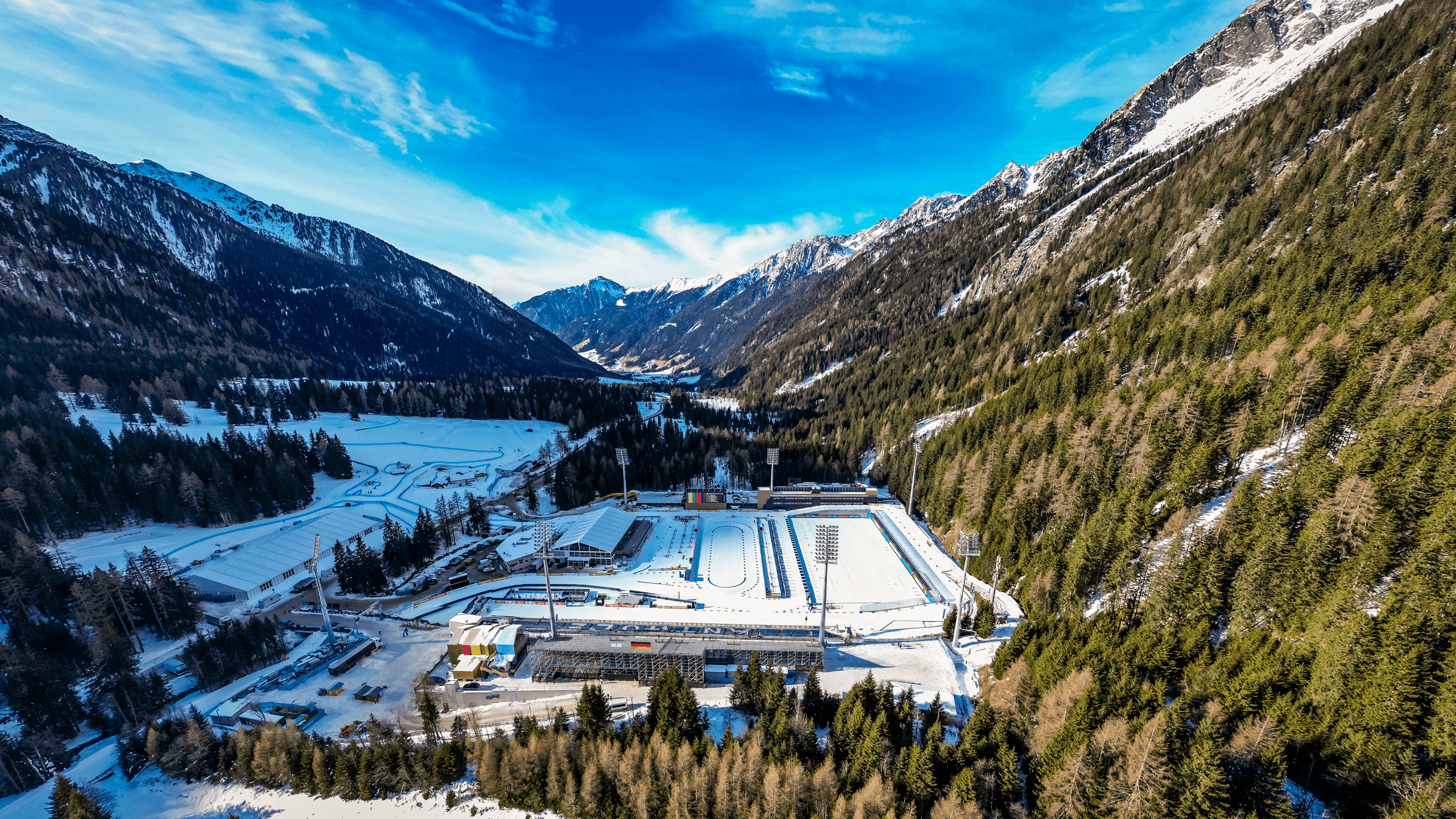
“Antholz is located at more than 1,600 metres above sea level and is the highest World Cup venue in terms of elevation,” says head of sustainability at the International Biathlon Union (IBU) Riikka Rakic about Milano Cortina 2026’s biathlon venue, a regular fixture on the IBU World Cup circuit.
“We do not have concerns about lack of snow there supported by the new snow-making system, which is certainly more energy and water efficient.”
Dependable snow is not only crucial in making alpine events possible, but also for protecting the quality of competition for broadcasters, sponsors, fans and athletes. All of these stakeholder groups rely on consistent conditions and aren’t blind to the problems posed by climate change.
Aware of the risks posed by unreliable snow, the IBU actively contributes to innovations in snow production through its participation in the ERASMUS+ SIEPPUR Sustainable Snow Management project. “Water management is a key issue concerning snow making and the amounts of water used are tracked as part of our annual Snow Network survey that is mandatory for all IBU event hosts,” explains Rakic.
A 2021 IBU athlete survey found that 90% believed biathlon had been impacted by the climate crisis, and 75% indicated they were either very or extremely concerned about climate change.
In response, the IBU established an Athlete Ambassador programme that has just entered its fifth year. “We have continued to work with ambassadors, along with our Athletes’ Committee, to serve as conduits to the larger athlete community,” says Rakic. “We provide them with information and facts related to climate change, how the IBU is taking climate action, and how they can help us do so as well.” This includes inviting athletes to take part in the IBU’s online Sustainability Course and providing athlete workshops at training camps and competitions.
Shaping the outlook
Milano Cortina 2026’s temporary infrastructure and water management strategies represent a step forward for integrating sustainability into sports events. Beyond compliance, organisers have established robust environmental measures that acknowledge wider societal and economic repercussions as a core pillar of event planning. All sports event organisers should consider implementing similar approaches to temporary infrastructure and water management.
To reduce CO2 emissions from heating temporary event structures, the IBU reimburses its event organisers for costs associated with transitioning away from diesel to renewable energy sources such as hydrotreated vegetable oil.
“Being a winter sport, the energy efficiency of temporary infrastructure is a key concern for us since temporary structures at our venues must be heated,” Rakic explains. “We are also keen to support the development of more energy-efficient temporary infrastructure and have taken note of Paris 2024’s work in this space.”
This awareness of other sports events reinforces a critical truth: sustainability in sport is not a solitary pursuit, but a collective responsibility.
The question for leaders in sport isn’t whether to act, but how to adapt, innovate and champion sustainable event hosting, before necessity forces their hand.